
Learn how to identify quality second-hand furniture that is suitable for restoration.
Great places to look are at op shops (thrift stores), at tip shops, in kerbside rubbish collection piles, at garage sales, for sale on Facebook Marketplace or in the pile of stuff your Gran wants to get rid of.
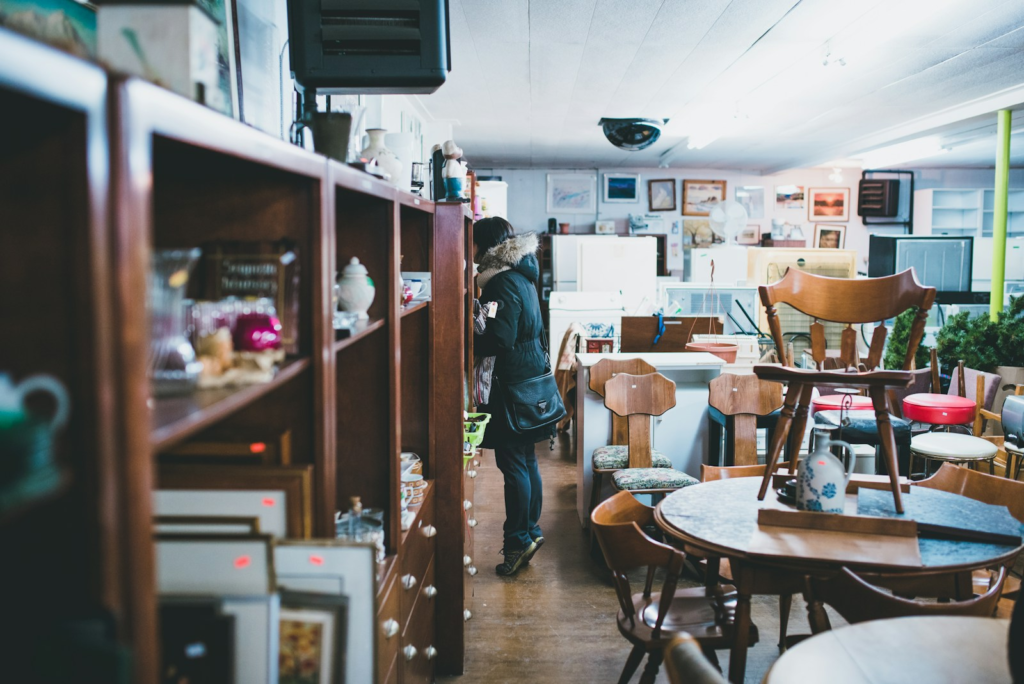
Discover what to buy, what to avoid, and how to find hidden gems for your next DIY makeover.
Introduction
Walking into an op shop (thrift store) or scrolling through online furniture listings can feel a little overwhelming. Rows of mismatched furniture, worn finishes and dated styles often hide incredible pieces just waiting for a second chance.
The secret to successful furniture flipping isn’t finding the prettiest piece—it’s recognising quality beneath the scratches, faded paint and outdated hardware.
Whether you’re decorating your home on a budget or hoping to make money through furniture flipping, learning what to look for can save you hundreds of dollars and help you avoid costly mistakes.
Here’s how to spot furniture that’s truly worth bringing home and that is suitable for restoration.
Look Beyond the Finish
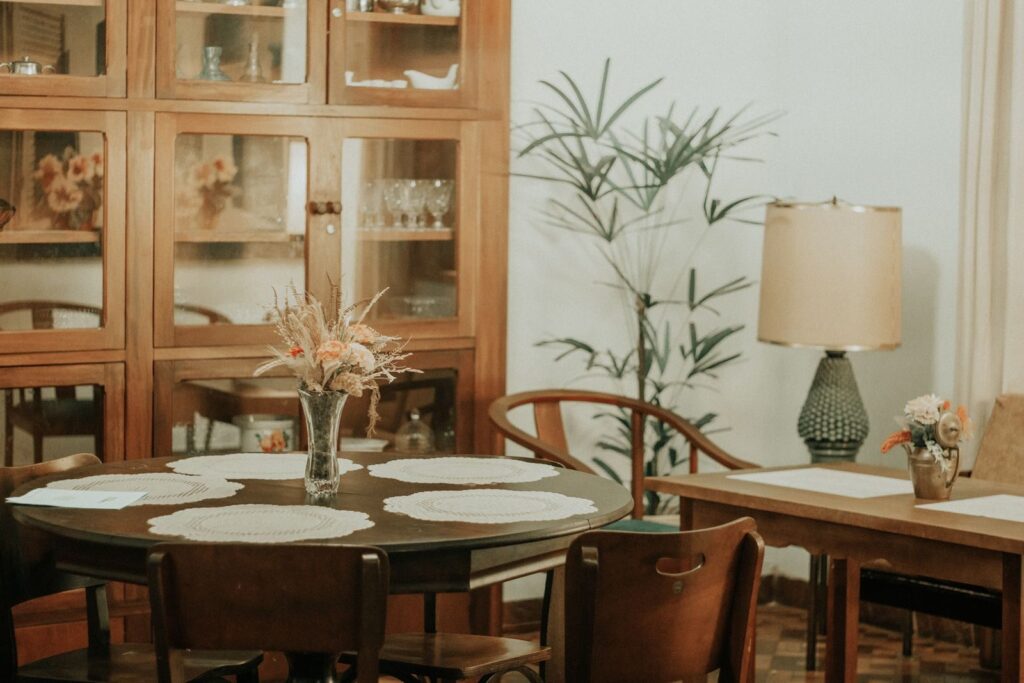
One of the biggest mistakes beginners make is judging furniture by its appearance.
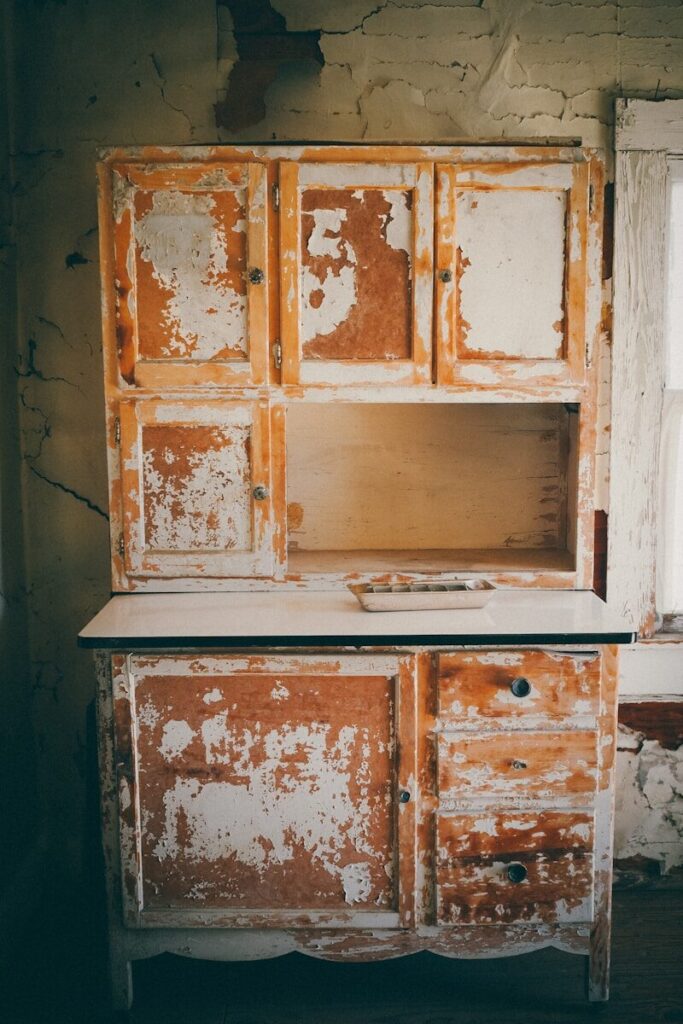
A scratched tabletop or chipped paint might look terrible, but cosmetic damage is usually the easiest and cheapest thing to fix.
Instead, ask yourself:
- Is the frame solid?
- Does it wobble?
- Are all the parts present?
- Is the damage only on the surface?
Paint, stain, new hardware and a little sanding can completely transform a tired piece of furniture.
Always buy for quality when finding furniture suitable for restoration—not colour.
Solid Timber is King
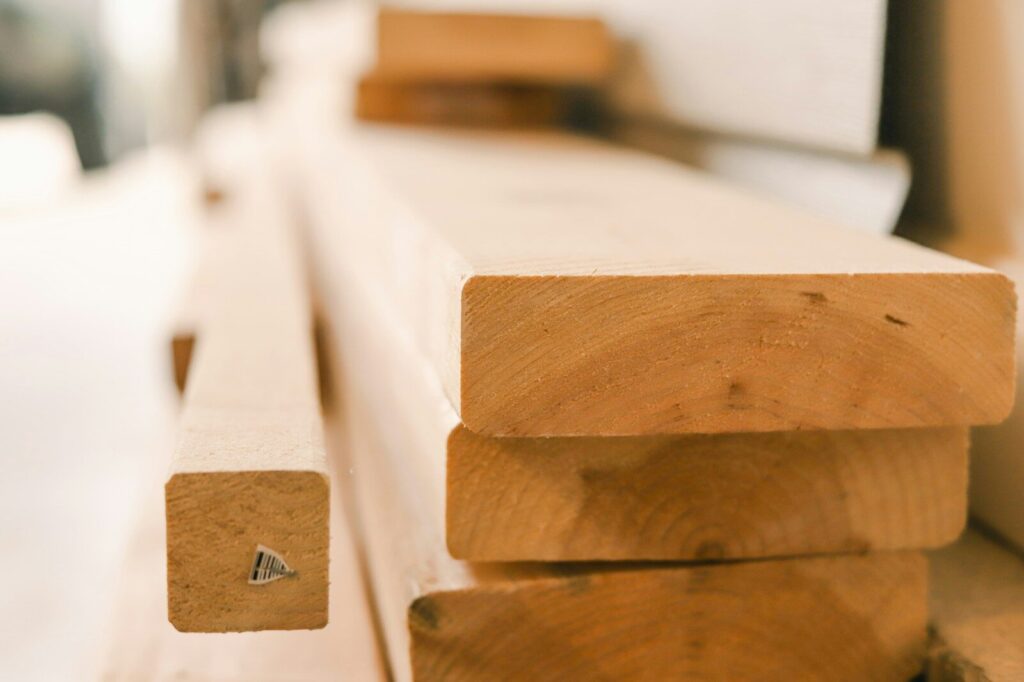
Solid timber furniture is one of the best investments you can make.
Unlike particleboard or MDF, solid wood can be:
- Sanded multiple times
- Painted
- Stained
- Repaired
- Restored for decades
It also tends to hold its value much better.
Some common solid timbers include:
- Oak
- Pine
- Blackwood
- Jarrah
- Tasmanian Oak
- Victorian Ash
- Teak
Even if the finish looks terrible, solid timber is often worth restoring.
Learn to Spot Veneer
Many people think veneer automatically means poor quality—but that’s not always true.
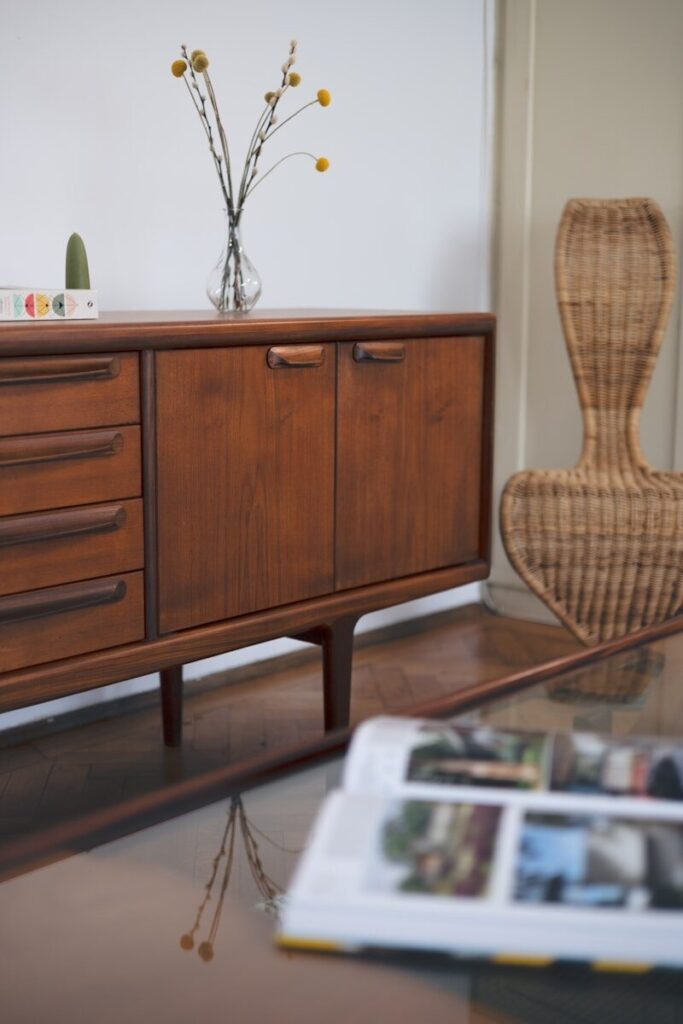
Older furniture (particularly those beautiful mid-century pieces with the tapered legs and sleek designs) often features genuine timber veneer over solid timber or quality plywood.
Good veneer can produce beautiful furniture and can be very suitable for restoration.
In fact, some of the iconic Australian mid-century modern (MCM) manufacturers like Parker and Chiswell purposefully engineered their furniture using high-quality teak veneer over a stable core substrate (like high-grade particleboard or ply). Solid teak expands, contracts, warps, and splits over time when exposed to humidity. However, veneer allowed master artisans to achieve perfectly stable, book-matched grain patterns that have easily survived 60+ years in everyday Australian dining rooms.
Example
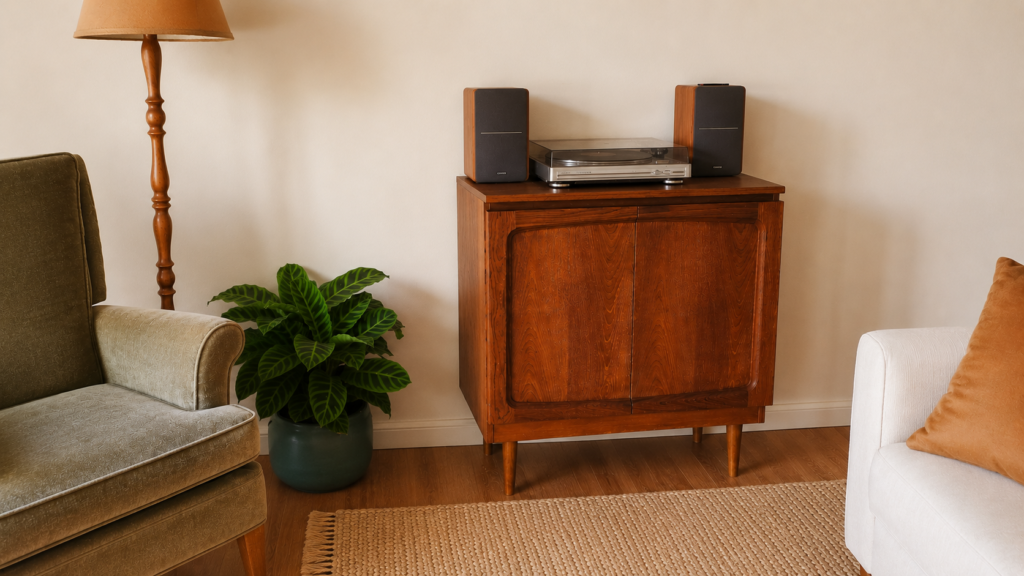
This gorgeous veneer cabinet had a mahogany-like stain, water damage to the base and visible chemical damage from leaking bottles that had been stored on the top so it was being given away for free. I sanded it back, added some teak-stained tapered legs, applied Danish oil and a coat of satin hardwax oil and it is good to go for another 60+ years.
Laminate
The problem is cheap plastic laminate, which cannot be sanded as it will smoke, melt and completely ruin the piece.
If you’re unsure, look, feel and inspect the piece carefully.
Look for visible grain. Plastic laminate will have an identical repeating printed pattern with a very obvious edge. High-quality veneer can also have a similar-looking repeating pattern but as a mirror image if thin slices are taken from the same piece of wood – called book-matching. However, because laminate is printed digitally, this produces a perfect, flawless, pixel-for-pixel replica, instead of the slight variations in wood.
Touch it to see if it feels like wood. Real wood feels warm to the touch. It has organic texture, and if you close your eyes, you can often feel the tiny natural pores and grain ridges of the timber. In contrast, laminate feels cold, perfectly flat, and slick like plastic or glass. Even modern “textured” laminates feel artificial because the texture repeats rhythmically and doesn’t match the visual printed grain pattern.
Inspect closely for any damage. If veneer chips, you will see real raw wood fibers and layers splintering underneath the damage. If laminate is damaged, it cracks like hard plastic or chips off in brittle, razor-sharp shards.
Check the Joinery
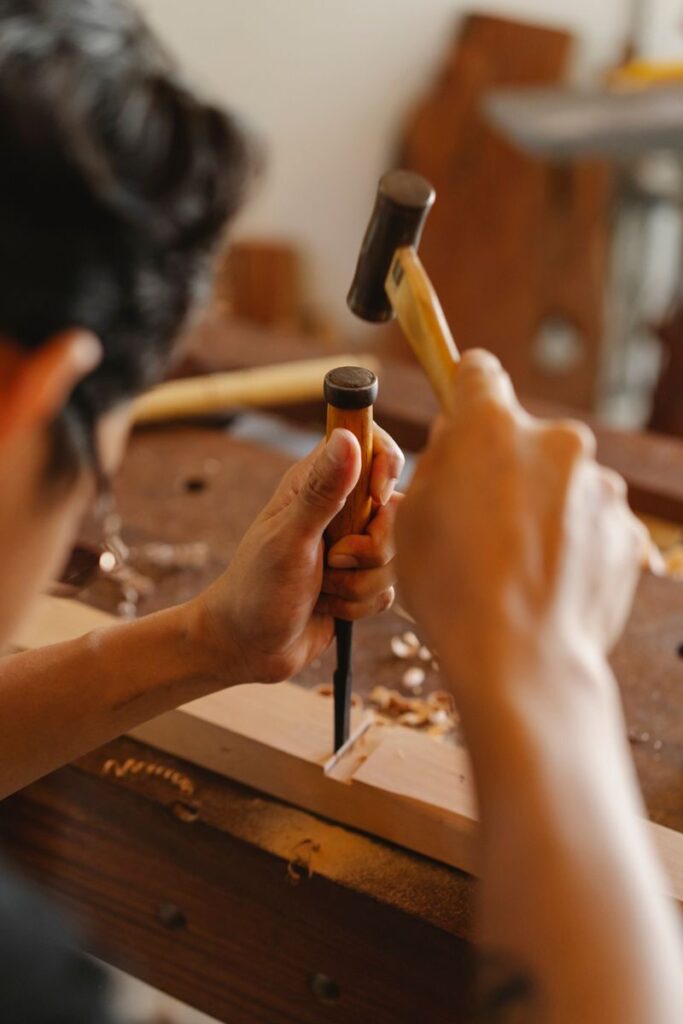
The way furniture is built tells you a lot about its quality.
Look for:
- Dovetail joints
- Mortise and tenon joints
- Wooden dowels
- Solid timber frames
Avoid furniture held together almost entirely with staples, thin screws or plastic fittings.
Well-made furniture was built to last decades—not just a few years.
Open Every Drawer
Never buy a chest of drawers without opening every drawer.
Check that they:
- Open smoothly
- Close properly
- Don’t sag
- Aren’t warped
- Don’t smell musty
A sticking drawer might simply need cleaning or adjustment. Alternatively, a simple beeswax candle can be brilliant for rubbing on the underside of a wooden drawer to make it run more smoothly.
However, swollen timber from water damage can be much more difficult to repair.
Smell the Furniture
It might sound strange, but smell tells a story.
Avoid furniture with strong:
- Mould
- Mildew
- Cigarette smoke
- Pet urine
- Chemical odours
These smells can be extremely difficult to remove and sometimes remain even after restoration.
If the piece smells clean, you’re already ahead. However, if you have a sensitive nose, you will find that furniture always smells of something.
The question is whether you can live with it. There are tips and tricks to seal in smells that won’t come out of wood using a shellac sealer but you can often reduce a strong smell but not necessarily remove it entirely. Consider this when thinking about whether a piece of furniture is suitable for restoration.
Check for Water Damage
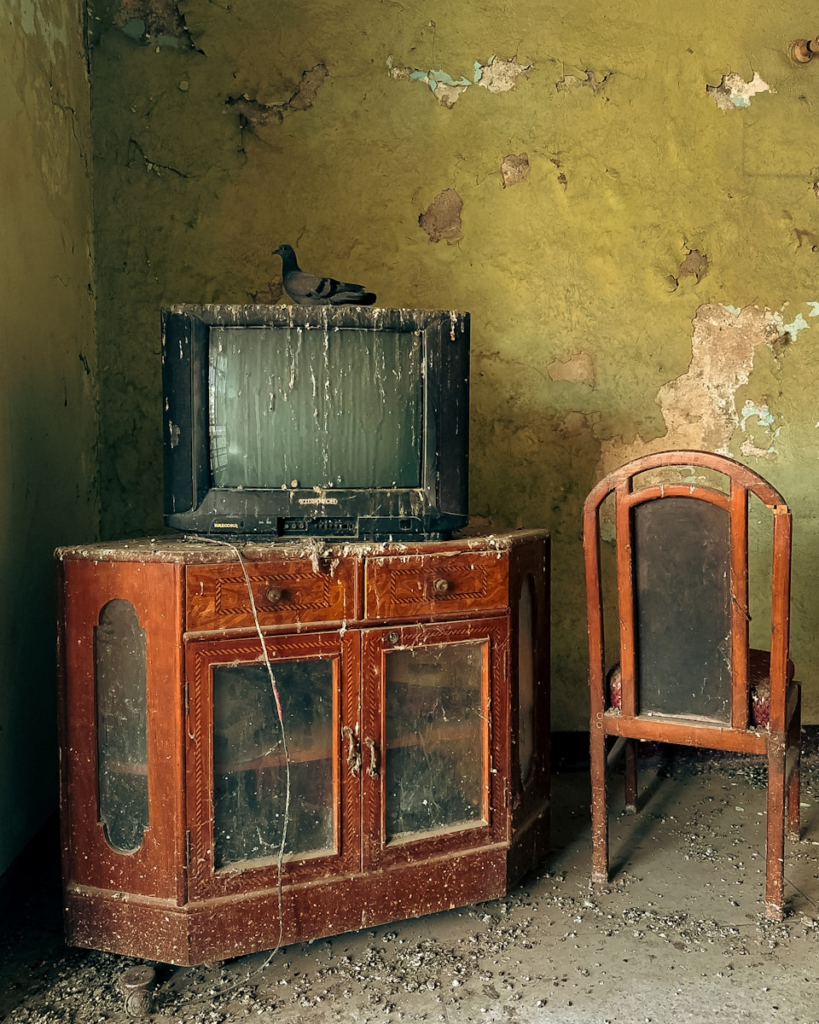
Water damage can permanently weaken furniture.
Look for:
- Bubbling veneer
- Swollen edges
- Soft timber
- Discolouration
- Delaminating surfaces
Minor marks can often be repaired.
However, major structural damage usually isn’t worth the effort unless the piece is particularly valuable and you have a good eye for colour matching any repairs.
Wiggle Everything
A quick shake tells you a lot.
Test:
- Chair legs
- Table legs
- Arms
- Shelves
- Doors
Some movement simply means loose screws.
However, large amounts of movement may indicate broken joints that require more advanced repairs.
Don’t Fear Ugly Furniture
Many beginners walk straight past furniture that looks old-fashioned.
However, that’s often where the bargains are hiding.
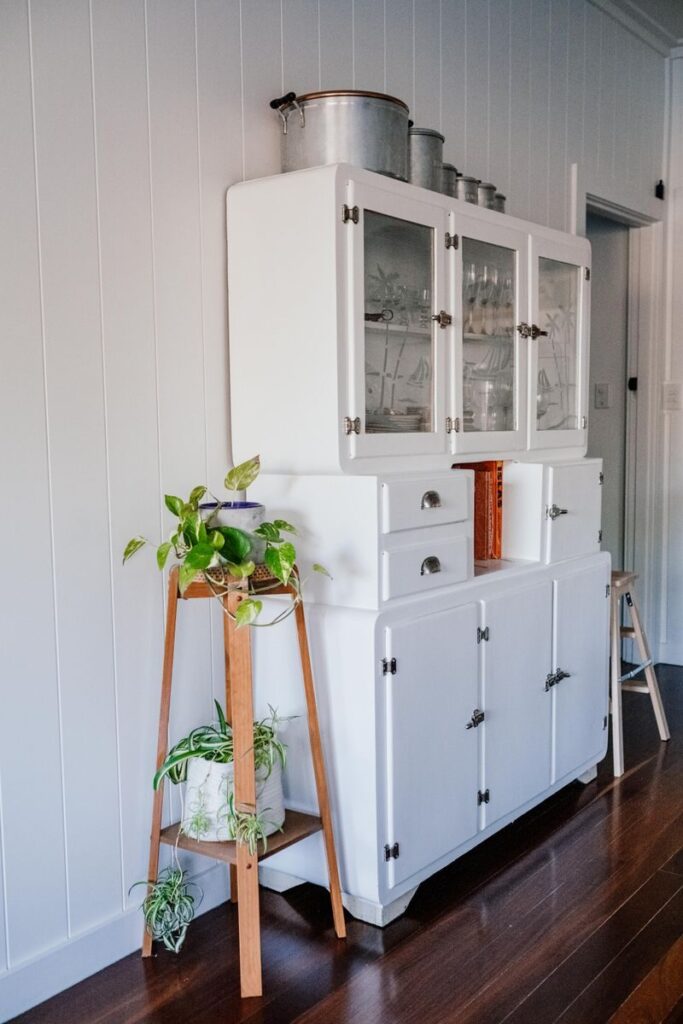
An outdated pine dresser from the 1990s can become a stunning modern piece with:
- Fresh paint
- New handles
- Better styling
- Modern hardware
Try to imagine the furniture after the makeover when thinking about whether it is suitable for restoration—not as it sits today. Free AI tools like ChatGPT can be really useful to help you see what a piece of furniture could look like after a revamp. Just upload the original picture and the brief.
Pro Tip: Due to the image upload and generation limits with AI tools, it can be useful to ask for 4-12 comparison options in the same image so you don’t end up having to wait until your limit resets.
Hardware Can Be Replaced
Old handles, knobs and hinges shouldn’t put you off buying quality furniture.
Replacing hardware is one of the easiest ways to modernise a piece.
For less than $30, you can completely change the look of many cabinets and drawers.
See the article on “How to find the best bargains on AliExpress” for more information on sourcing hardware and other handy restoration items.
Check the Underside
Turn the furniture over if possible.
The underside often reveals:
- Construction quality
- Timber type
- Previous repairs
- Manufacturer labels
- Signs of pests (e.g. termites or borers)
It’s one of the quickest ways to tell whether you’re looking at quality craftsmanship or mass-produced flat-pack furniture.
Brands Worth Looking For
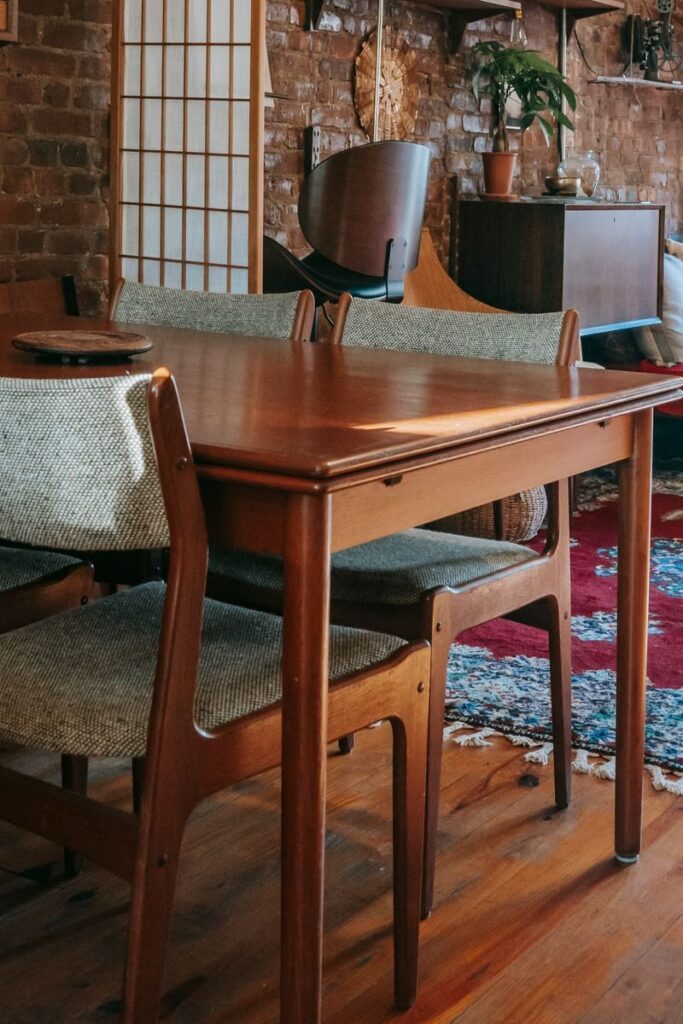
Australia has produced many quality furniture makers over the years, including Parker, Chiswell, CRO, FLER, Tessa, Macrob and Noblett.
Keep an eye out for older pieces from well-known manufacturers, as well as locally made solid timber furniture.
Many unbranded pieces are also excellent quality, particularly those made before the rise of inexpensive flat-pack furniture.
In addition, adding some tapered legs and new hardware to a piece of furniture can also make it much more desirable and elevate it into having an MCM-like appearance, even if it was made in a different era.
Know What to Avoid
Not every bargain is worth buying.
Think twice before purchasing furniture with:
- Severe termite damage
- Rotten timber
- Major structural cracks
- Missing large sections
- Broken particleboard
- Extensive mould
- Strong odours
- Warped frames
- Extensive upholstery work required
Repair costs can quickly exceed the value of the finished piece.
Essential Tools to Take Shopping
If you’re serious about furniture hunting, keep a small kit in your car.
Include the following:
- Tape measure
- Torch
- Magnet (brass handles are not magnetic)
- Screwdriver
- Cleaning wipes
- Blanket for transport
- Tie-down straps
Being prepared can help you inspect furniture properly and get it home safely.
Think About the End Result
Before buying, ask yourself three simple questions:
- Would I proudly display this in my own home?
- Can I realistically restore it?
- Is it worth the time and money?
If the answer is yes, you’ve probably found a great candidate for restoration.
Final Thoughts
Finding quality second-hand furniture is a skill that improves with experience.
The more pieces you inspect, the easier it becomes to recognise solid construction, quality materials and hidden potential.
Remember that scratches, faded paint and outdated colours are easy to fix. Structural problems, poor construction and water damage are much harder—and often not worth the effort.
The next time you’re browsing your local op shop (thrift store) or scrolling on Facebook Marketplace, look beyond the surface. That worn-looking cabinet or scratched dining table could become the standout piece in your home with a little creativity and elbow grease.
Happy hunting—you never know what treasure you’ll discover next.
Frequently Asked Questions
Is solid timber always better than MDF?
For restoration projects, solid timber is generally the better choice because it can be sanded, repaired and refinished multiple times. However, some of most valued pieces have been quality veneer over particle-board, but a little more care is required in refinishing.
How can I tell if furniture is solid wood?
Check exposed edges, the underside and inside drawers. Solid timber has consistent grain, while laminate over MDF often has obvious manufactured edges and a plasticky feel.
Is veneer worth buying?
Yes. High-quality timber veneer over a solid frame can be an excellent choice, especially on older furniture. Avoid confusing real veneer with printed laminate.
What furniture sells best after restoration?
Dining tables, sideboards, coffee tables, bedside tables, and timber cabinets are consistently popular because they’re practical and suit a wide range of homes. Smaller pieces tend to be easier to sell (although offering delivery can help).
What’s the biggest mistake beginners make?
Buying furniture because it’s cheap instead of buying it because it’s well made. Quality construction is always more important than appearance.
Leave a Reply